
Pinion Insights
Practical ideas for safer, simpler work.
Cybersecurity, process improvement, and purposeful technology for small organizations.

You Can Outsource the Technology—Not the Risk
A vendor may operate your technology, store your data, or administer your systems—but your business still experiences the consequences when that provider is breached or unavailable. Start by identifying which vendors create access, data, or continuity risk. Outsource the work deliberately, but do not outsource awareness of the risk.

When One Employee Becomes the Process
When essential knowledge exists only in one employee’s head, an ordinary absence can become a business interruption. Learn how to reduce that dependency without documenting every click or treating valued employees as replaceable.

The Email Looked Real. The Payment Request Wasn’t.
Employees should not be expected to identify every convincing fake. When an email requests new banking details or an unusual payment, the business should use a verification process that works even when the message looks legitimate. Trust the relationship—but verify the transaction.

Repeated Data Entry: The Hidden Cost of Duplicate Records
Entering the same information twice is not merely wasted labor. Every unnecessary copy creates another opportunity for error, another record to maintain, and another place where the business may lose track of the truth. Before connecting your tools, decide which record should be trusted.
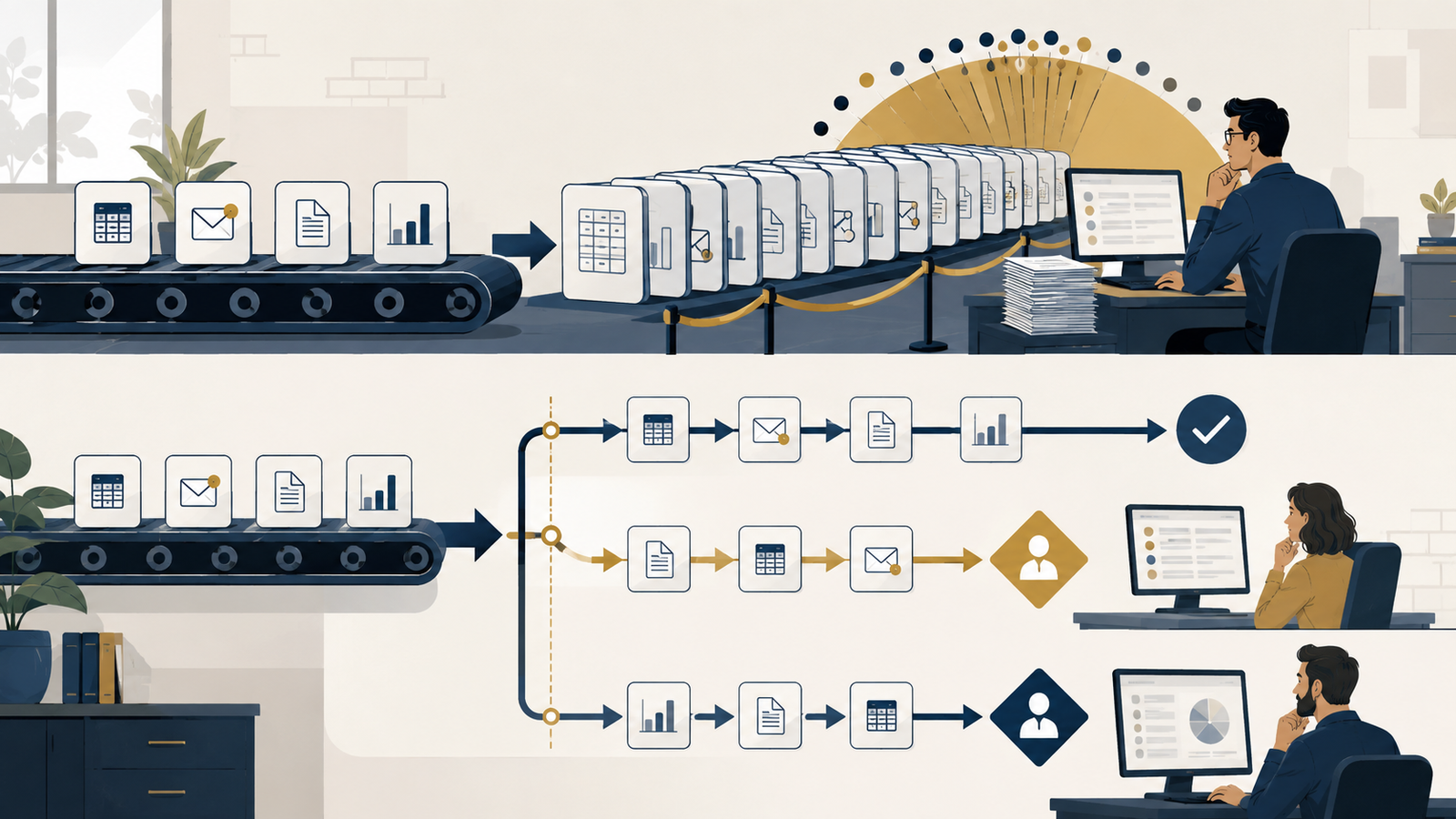
When Approval Becomes the Bottleneck
An approval adds value when someone makes a real decision, applies necessary expertise, or accepts meaningful risk. If the reviewer simply acknowledges the request or routinely clicks “approve,” the step may be delay disguised as control. A control should control something.

Automate What Makes Sense – Not Everything You Can
The ability to automate a task does not make automation the right business decision. A poorly chosen automation can make a flawed process faster, spread errors at scale, and create another system your team must maintain. Start with the friction, simplify the process, and automate only where the value exceeds the burden.

When the Workaround Becomes the Real Process
The most important process in your business may be the one that is not documented anywhere. Employee workarounds often begin as practical solutions—but once the business depends on them, they can hide delays, fragmented data, security gaps, and single points of failure.

Network Segmentation for Small Businesses: Reduce Risk Without Creating More Work
Learn how thoughtful network segmentation can limit cyber risk, simplify troubleshooting, and keep employees productive—without creating unnecessary IT complexity.